Royal Jelly vs Manuka Honey: Which Is Right for You?

Royal jelly and manuka honey are two of the most prized products the beehive produces — and two of the most expensive. So it’s natural to wonder which one you should be spending your money on.
Here’s the honest answer up front: they’re not really competitors. They’re both premium bee products, but they do fundamentally different jobs. Choosing between them isn’t about which is “better” — it’s about which fits what you’re actually looking for. Let’s break it down.

The Short Version
- Royal jelly is a nutrient-dense supplement, taken internally for general wellbeing. Its signature compound is 10-HDA.
- Manuka honey is an antibacterial honey, best known for topical wound care and soothing uses. Its signature compound is MGO (methylglyoxal), graded by the UMF system.
If you want a daily nutritional supplement, that points to royal jelly. If you want an antibacterial honey for a sore throat or minor skin care, that points to manuka. Many people who are serious about natural wellness simply use both, for different reasons.
What They Actually Are
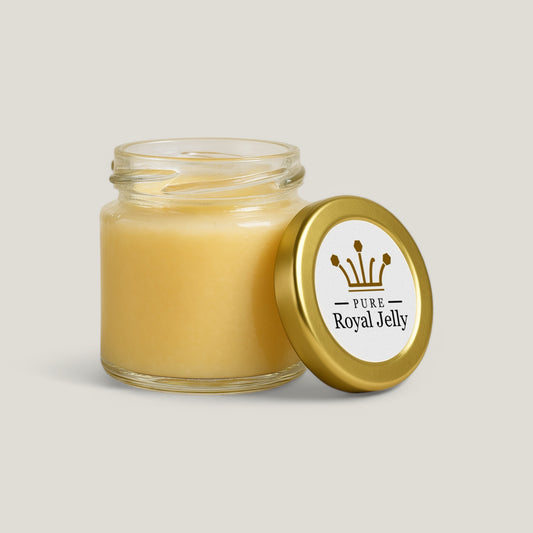
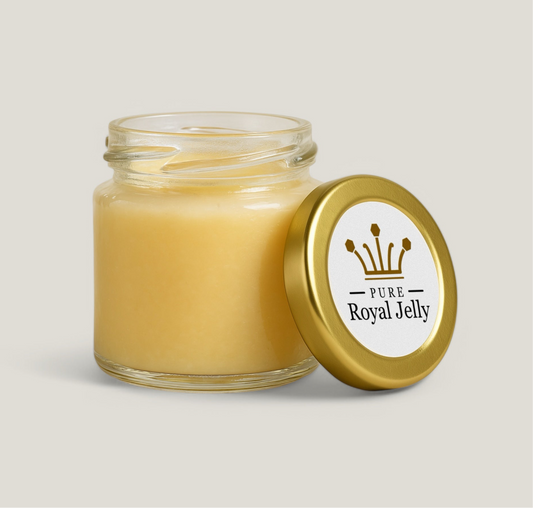
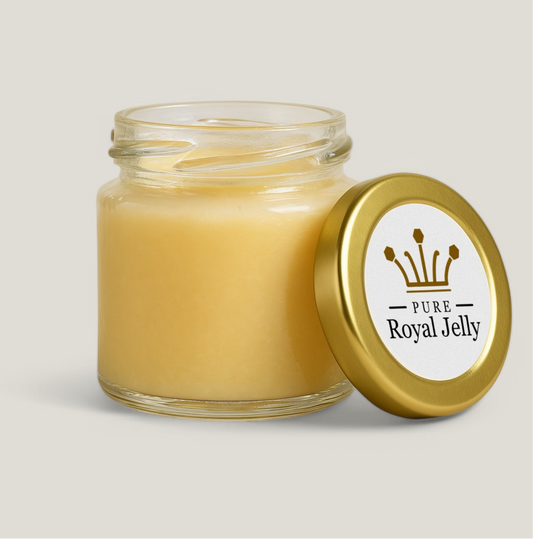
Royal jelly is a milky secretion produced by worker bees to feed the queen. It’s not a honey at all — it’s a food made by bees for bees, exceptionally rich in proteins, amino acids, B vitamins, antioxidants and the unique fatty acid 10-HDA. It’s taken as a supplement for its nutritional value. (For the full picture, see the benefits of royal jelly.)
Manuka honey is a honey — made by bees from the nectar of the manuka bush (Leptospermum scoparium), which grows in New Zealand and parts of Australia. What makes it special among honeys is an unusually high concentration of methylglyoxal (MGO), which gives it strong antibacterial properties.
So the very first distinction is simple: one is a honey, the other isn’t.
The Hero Compounds: 10-HDA vs MGO
Each product’s reputation rests on a signature compound, and comparing them tells you what each is for.
Royal jelly → 10-HDA. 10-hydroxy-2-decenoic acid is a fatty acid found in royal jelly and nowhere else in nature. It’s studied for antioxidant and anti-inflammatory properties and is the marker labs use to verify royal jelly’s quality and authenticity. Read more in our guide to what 10-HDA is.
Manuka honey → MGO. Methylglyoxal is the compound behind manuka’s antibacterial punch. It’s measured directly as MGO (e.g. MGO 250+), or via the UMF (Unique Manuka Factor) system, which grades authenticity and potency (UMF 10+ and above is considered therapeutic). Higher numbers mean more antibacterial activity.
Crucially, these compounds do different things: 10-HDA is about internal, nutritional and antioxidant properties; MGO is about antibacterial action. That’s the whole comparison in miniature.
What the Evidence Supports
Manuka honey’s strongest evidence is for its antibacterial and wound-healing properties — but with an important caveat: this is best established for medical-grade manuka applied topically (as a sterilised wound dressing), not for eating a jar of it. It’s also popularly used to soothe sore throats and support oral and skin health, though the evidence for eating it is more limited than the marketing suggests. It is not a nutritional supplement — it’s essentially a specialised honey.
Royal jelly’s strongest human evidence is for easing menopausal symptoms, shown in several randomised placebo-controlled trials (see our guide to royal jelly for menopause). More broadly, it’s valued as a nutrient-dense daily supplement for energy, skin and general wellbeing.
Neither is a medicine, and neither is a cure for anything. But their evidence points in different directions — manuka toward topical antibacterial use, royal jelly toward internal nutritional support.
How You Take Them
- Royal jelly: a small daily dose — about ¼ teaspoon of fresh royal jelly — taken under the tongue or stirred into something cold. It’s a supplement you take consistently.
- Manuka honey: eaten by the spoonful, added to food, used in drinks, or applied topically. Portions are much larger (it’s a honey), and it’s often used as-needed rather than as a strict daily dose.
One shared rule: don’t heat either to high temperatures. Heat degrades royal jelly’s delicate compounds, and it can reduce manuka’s beneficial properties too. Warm, not hot — and for royal jelly, ideally cold.
Taste
They couldn’t be more different. Manuka honey is sweet, rich and pleasant — it’s honey, after all. Royal jelly is sharply tangy, acidic and slightly bitter, with a bite. If flavour is your priority, manuka wins easily; royal jelly is taken for what’s in it, not how it tastes.
Cost
Both are premium-priced, for different reasons. Manuka is expensive because the manuka bush flowers only briefly in a limited geographic area, and high-UMF grades command a premium. Royal jelly is expensive because each hive yields only small amounts and it must be harvested painstakingly and kept cold. With both, higher quality (higher UMF, or higher 10-HDA) costs more — and with both, the number on the label is what tells you what you’re actually paying for.
So Which Should You Choose?
It comes down to what you want:
- Choose royal jelly if you want a daily nutritional supplement for general wellbeing, energy, skin, or menopause support — something you take internally and consistently.
- Choose manuka honey if you want an antibacterial honey for soothing a sore throat, topical skin use, or simply a premium honey with benefits.
- Choose both if you want the nutritional support of royal jelly and the antibacterial, soothing qualities of manuka — they complement each other rather than compete.
If it’s royal jelly you’re leaning towards, one thing matters more than anything else: choose it fresh. Processing and freeze-drying diminish its delicate compounds, which is why we only ever sell fresh — see fresh royal jelly vs capsules.
(Curious how royal jelly compares to the other hive products? See our guide to royal jelly vs bee pollen vs propolis, and for the broader honey comparison, royal jelly vs honey.)
Frequently Asked Questions
Is royal jelly better than manuka honey?
Neither is “better” — they do different jobs. Royal jelly is a nutrient-dense supplement taken internally; manuka honey is an antibacterial honey best known for topical wound care and soothing uses. The right choice depends on what you want.
Can you take royal jelly and manuka honey together?
Yes. They complement each other — royal jelly for nutritional support, manuka for its antibacterial and soothing qualities. Just be mindful of royal jelly’s allergy cautions below.
What’s the difference between 10-HDA and MGO?
10-HDA is royal jelly’s signature fatty acid, linked to antioxidant and anti-inflammatory properties and found in no other food. MGO (methylglyoxal) is manuka honey’s antibacterial compound, graded by the UMF system. Different compounds, different purposes.
Which is better for a sore throat?
Manuka honey — as a soothing, antibacterial honey it’s the more traditional choice for throats. Royal jelly is a supplement, not a throat remedy.
Which is better for skin?
It depends on how you use it. Manuka is often applied topically for its antibacterial properties; royal jelly is more often taken internally (and used in skincare) for its nutrients. Many people use both.
Is manuka honey a supplement like royal jelly?
No. Manuka honey is a specialised honey; royal jelly is a nutritional supplement. That’s the core difference.
The Bottom Line
Royal jelly and manuka honey are both remarkable products of the hive, but comparing them is a bit like comparing a multivitamin to an antiseptic — they’re simply for different things. Manuka honey is your antibacterial, soothing honey. Royal jelly is your nutrient-dense daily supplement. Pick based on the job you need doing — and if that job is everyday nutritional support, choose royal jelly, and choose it fresh.
If you’d like to try it, explore our range of fresh royal jelly.
Disclaimer: The information on this page does not constitute medical advice. Royal jelly is a food supplement and is not intended to diagnose, treat, cure or prevent any disease. It must not be used by children, or by women who are pregnant or breastfeeding. Avoid it if you are allergic to bees, bee pollen or bee products, and consult your doctor before use if you take any medication or have a health condition.
Sources
- WebMD, Manuka Honey: Medicinal Uses, Benefits, and Side Effects (antibacterial/wound-healing evidence; UMF/MGO). webmd.com
- Antibacterial activity of varying UMF-graded Manuka honeys, PMC. pmc.ncbi.nlm.nih.gov
- UMF Honey Association — grading and authenticity of manuka honey (UMF/MGO systems).