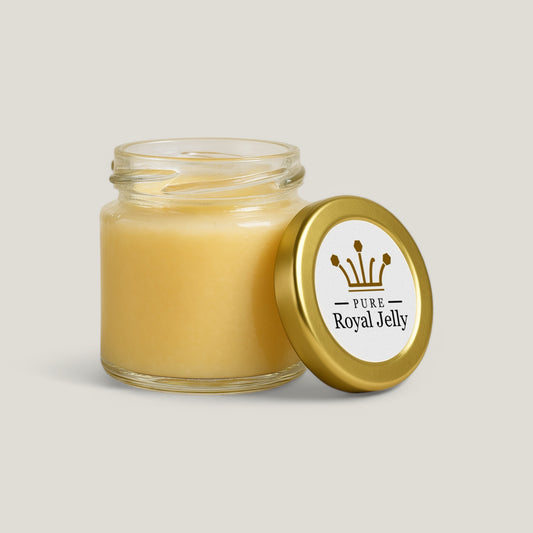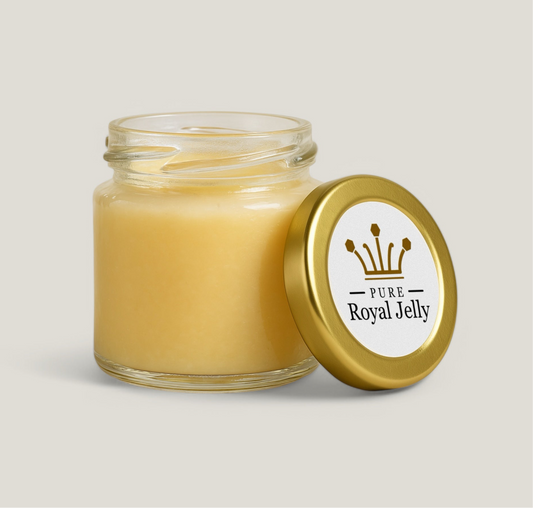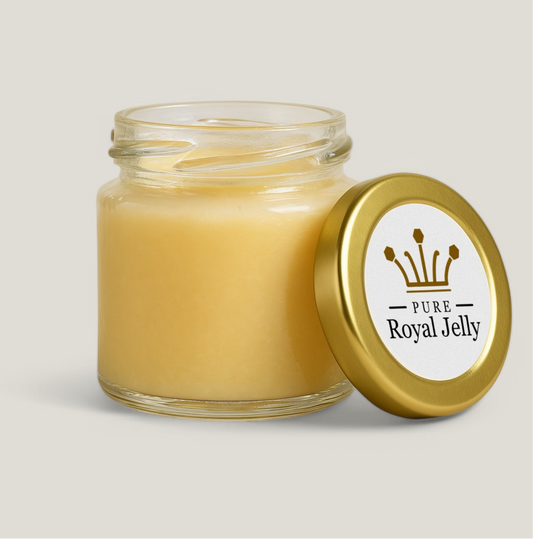
Royal Jelly Dosage: How Much Should You Take?

One of the most common questions about royal jelly is simply: how much should you take? This guide gives you a clear, honest answer — how much to start with, the amount most people settle on, and how to stay on the safe side.
How Much Royal Jelly Should You Take Per Day?
There’s no official dose for royal jelly, but most people take about ¼ teaspoon of fresh royal jelly per day (roughly 1–2 grams). If you’re new to it, start with ¼ teaspoon once each morning and keep it consistent. Many clinical studies have used around 1 gram a day.

| When | Amount of fresh royal jelly | Notes |
|---|---|---|
| Starting out (first 1–2 weeks) | about ¼ teaspoon per day | Ease in gently and check you tolerate it well |
| Everyday use | about ¼–½ teaspoon per day (≈ 1 gram) | The amount most people settle on |
| Good to know | — | Don’t exceed the dose on your product, and more isn’t necessarily better |
How Much Should Beginners Start With?
If you’re new to royal jelly, start with ¼ teaspoon of fresh royal jelly a day, taken in the morning. Starting low lets you check how you respond (important if you have any allergy history) and lets your body adjust. Once you’re comfortable after a week or two, you can continue at that amount or increase slightly if you wish.
Can You Take Too Much Royal Jelly?
There’s no officially established upper limit, but more isn’t necessarily better — and you should never exceed the dose stated on your product. Most people do perfectly well on ¼–½ teaspoon a day. Taking very large amounts offers no proven extra benefit and increases the chance of side effects such as mild digestive upset. If you have a bee or pollen allergy or asthma, the concern is an allergic reaction rather than dose, so speak to your doctor before starting at all.
Does the Right Amount Depend on Your Goals?
Not really. You may see royal jelly marketed with different “doses” for energy, skin or other goals, but the honest position is that there isn’t robust evidence for goal-specific dosing. A consistent daily amount of around ¼ teaspoon is a sensible general approach for most people — consistency over time matters far more than the exact amount. For what royal jelly may help with, see our guide to the benefits of royal jelly.
Fresh vs Capsules: Does the Dose Differ?
Yes — because they’re measured differently. Fresh royal jelly is measured by the spoonful (about ¼ teaspoon), while capsules and powders state a set number of milligrams per serving, so you simply follow the pack. One important point: fresh royal jelly retains the fullest spectrum of active compounds, whereas processing into capsules can reduce them — so equal “amounts” aren’t always equal in potency. For the full comparison, see fresh royal jelly vs capsules.
How to Take Your Daily Amount
Once you know how much, taking it is simple:
- Under the tongue — hold your ¼ teaspoon there for a minute before swallowing, for the most direct absorption.
- With a little honey — softens the tangy taste.
- In something cold — stir it into cold water, juice or a smoothie; avoid hot or warm drinks, which can affect its delicate compounds.
For the best timing, see our guide on when to take royal jelly, and for making it stick, our guide to building it into your daily routine.
Safety and Who Shouldn’t Take It
- Allergies: avoid royal jelly if you’re allergic to bees, bee pollen or bee products, and take particular care if you have asthma.
- Not for everyone: it should not be taken by children, or by women who are pregnant or breastfeeding.
- Medication or conditions: check with your doctor first.
- Start low and stop if you notice any adverse reaction such as digestive upset or a skin rash.

Frequently Asked Questions
How much royal jelly should I take a day?
Most people take about ¼ teaspoon of fresh royal jelly per day (roughly 1–2 grams), which is in line with the ~1 gram used in many studies. There’s no official dose, so start low and consult your doctor if unsure.
How much royal jelly should a beginner take?
Start with ¼ teaspoon of fresh royal jelly once a day in the morning, and stay at that level for the first week or two before adjusting.
Can you take too much royal jelly?
There’s no established upper limit, but more isn’t better. Don’t exceed your product’s stated dose; most people do well on ¼–½ teaspoon a day.
How long does royal jelly take to work?
Its benefits build gradually, so take it consistently for several weeks before judging results.
Can you take royal jelly every day?
Yes — royal jelly is designed to be taken daily, and consistency is what brings the most benefit.
Is it better to take royal jelly in the morning?
Many people prefer the morning, on an empty stomach. See our when-to-take guide for the full morning-vs-night comparison.
The Bottom Line
For most people, the answer to “how much royal jelly should I take?” is simple: start with about ¼ teaspoon of fresh royal jelly a day, take it consistently, and don’t exceed the amount on your product. There’s no official dose, so listen to your body, start low, and check with your doctor if you’re unsure — and remember that with royal jelly, consistency matters far more than quantity.
If you’d like to try it, explore our range of fresh royal jelly.
Disclaimer: The information on this page does not constitute medical advice. Royal jelly is a food supplement and is not intended to diagnose, treat, cure or prevent any disease. It must not be used by children, or by women who are pregnant or breastfeeding. Avoid it if you are allergic to bees, bee pollen or bee products, do not exceed the stated dose, and consult your doctor before use if you take any medication or have a health condition.
Sources
- Sharif S.N. & Darsareh F. (2019) menopausal symptoms RCT — used 1,000 mg/day, Complementary Therapies in Medicine: sciencedirect.com
- Asama T. et al. (2018) postmenopausal study — used 800 mg/day, Evidence-Based Complementary and Alternative Medicine: pmc.ncbi.nlm.nih.gov
- Collazo N. et al. Royal Jelly: Biological Action and Health Benefits (general dosing context), PMC: pmc.ncbi.nlm.nih.gov