When to Take Royal Jelly: Morning or Night?

Royal jelly is one of the most nutrient-rich foods in the hive, and more and more people are adding a daily spoonful to their wellness routine. But one question comes up again and again: is it better to take royal jelly in the morning or at night? Here’s the honest, evidence-informed answer - along with how to take it so your body actually absorbs it.
The Short Answer
For most people, the best time to take royal jelly is first thing in the morning, on an empty stomach, about 20–30 minutes before breakfast. Taking it early makes the most of its natural energising quality, and an empty stomach helps protect its delicate active compounds so more of them are absorbed. Evenings are generally not recommended, because royal jelly can be mildly stimulating and may interfere with sleep for some people.
That’s the rule of thumb. The detail below explains why - and when it’s fine to bend it.

Why Morning Is the Best Time
It works with royal jelly’s natural energy. Royal jelly is rich in B-complex vitamins, which play a role in energy metabolism. Many people describe a calm, steady lift after taking it - quite different from the spike and crash of caffeine. Taken in the morning, that fits the natural rhythm of your day.
An empty stomach protects the good stuff. Royal jelly owes much of its reputation to fragile compounds - the major royal jelly proteins (MRJPs) and the fatty acid 10-HDA. These can be broken down by stomach acid and digestive enzymes when there’s a full meal to process. Taking royal jelly on an empty stomach means less acid and a faster transit, so more of those compounds survive to be absorbed.
Under the tongue is better still. With fresh royal jelly, holding your dose under the tongue for a minute or two (the “sublingual” method) lets some of the active compounds absorb directly through the mucous membranes into the bloodstream, partly bypassing the digestive system altogether.
What About Taking Royal Jelly at Night?
You’ll see plenty of claims online that night-time royal jelly aids sleep, “balances hormones,” or supports overnight repair. It’s worth being straight with you: that isn’t well supported. If anything, royal jelly’s mildly stimulating effect (thanks to those B vitamins) means a late dose can make it harder to drop off for some people - which is exactly why traditional producers advise against evening use.
There’s one point of nuance. In studies of menopausal women, royal jelly taken daily over 8–12 weeks improved overall quality of life, including sleep scores - but that’s the result of easing symptoms like hot flushes and anxiety over weeks, not an immediate bedtime sedative effect. So it’s not a sleep aid you take before bed.
The practical takeaway: if you’ve tried royal jelly in the evening and it genuinely doesn’t affect your sleep, it’s fine to keep going - consistency matters more than the exact hour. But if you’re unsure, default to the morning.
Morning vs Night: The Verdict
| Morning (recommended) | Night | |
|---|---|---|
| Energy | Works with its natural lift | Can disrupt sleep for some |
| Absorption | Best on an empty stomach before breakfast | Fine if stomach is empty |
| Best for | Most people, most goals | Only if it doesn’t affect your sleep |
For the large majority of people, morning wins.
How to Take Royal Jelly for the Best Absorption
Timing is only half of it - how you take it matters just as much.
- Take it on an empty stomach, ideally 20–30 minutes before breakfast.
- Place fresh royal jelly under your tongue and let it dissolve for a minute or two before swallowing.
- Wait before eating or drinking. Give it 20–30 minutes before breakfast.
- Keep it away from tea and coffee. Caffeine (and the theine in tea) may slow the absorption of its active compounds, so don’t take it alongside your morning brew.
- Soften the taste if needed. Fresh royal jelly is tangy and slightly bitter — mixing it with a little honey is a popular way to make it more pleasant, especially for the first few days.
- Keep fresh royal jelly refrigerated and never add it to hot drinks, which degrade its delicate compounds.
If royal jelly ever upsets your stomach, taking it with a small amount of food is perfectly fine. The absorption drops slightly, but a habit you can stick to beats a perfect routine you abandon.

How Much Royal Jelly, and How Often?
There’s no official dose, but a commonly used amount for adults is around 0.25-1 gram of fresh royal jelly per day (roughly a quarter to half a teaspoon). If you’re new to it, start lower - around a quarter teaspoon - and build up gradually so you can check for any sensitivity.
Royal jelly is often taken as a “course” of around a month at a time, and many people run a course at the change of seasons. For consistency, some split their daily amount into a smaller morning and early-afternoon dose to keep a steady level through the day - just avoid the late-evening dose if you’re sensitive to its stimulating effect.

How Long Until You Notice Anything?
This varies a lot from person to person. Some people report a gentle, steady sense of energy within 30–60 minutes of taking it. For the kinds of benefits studied in trials, such as improvements in menopausal symptoms, the research ran over 8–12 weeks of daily use. In other words, royal jelly is best thought of as a slow, supportive addition to your routine rather than an instant fix. Consistency over several weeks is where people tend to see the most.
Does the Form Matter - Fresh vs Capsules?
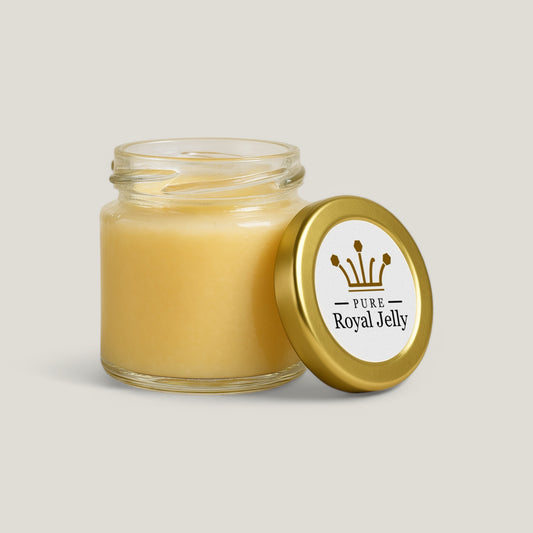
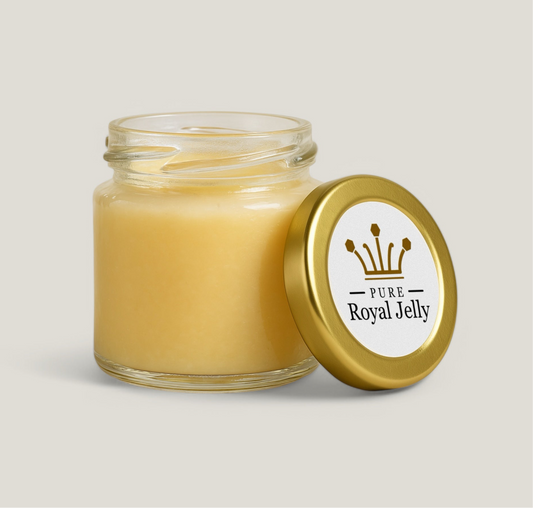
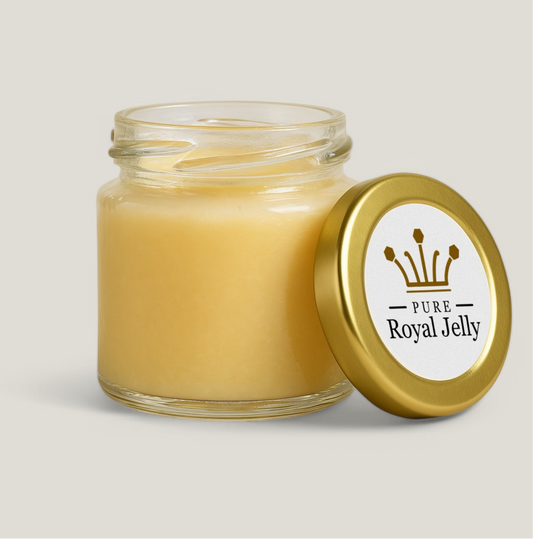
Yes, especially for the sublingual method. Fresh royal jelly stays closest to its natural state and can be held under the tongue for direct absorption. Freeze-dried powders and capsules are more convenient and shelf-stable, but some of the delicate compounds are lost in processing, and you can’t absorb a capsule sublingually. If you’re taking royal jelly for the fullest effect, fresh is undoubtedly the best form.
Is Royal Jelly Safe? Who Should Avoid It
Royal jelly is generally well tolerated, but a few people should not take it:
- Anyone with a bee, pollen or honey allergy — avoid it, as reactions can range from a rash to, rarely, serious anaphylaxis.
- People with asthma — best avoided, as it can trigger severe reactions.
- Anyone on medication — particularly blood thinners such as warfarin — should check with their GP first.
- Children, and women who are pregnant or breastfeeding — should not take royal jelly.
Introduce it slowly and stop straight away if you notice itching, swelling or any difficulty breathing.

Frequently Asked Questions
When is the best time to take royal jelly?
First thing in the morning, on an empty stomach, about 20–30 minutes before breakfast. This makes the most of its natural energising quality and helps protect its delicate compounds for better absorption.
Should you take royal jelly on an empty stomach?
Yes, an empty stomach means less stomach acid to break down its fragile proteins and 10-HDA, so more is absorbed. If it upsets your stomach, taking it with a little food is fine.
Can you take royal jelly at night?
You can, but it isn’t usually recommended: royal jelly can be mildly stimulating and may disrupt sleep for some people. If you’ve found it doesn’t affect your sleep, it’s fine to continue.
How do you take fresh royal jelly?
Place your dose under the tongue and let it dissolve for a minute or two before swallowing. If the tangy taste is too strong, mix it with a little honey. Keep it refrigerated and never add it to hot drinks.
How much royal jelly should I take per day?
There’s no official dose, but around 1 gram (roughly a teaspoon) of fresh royal jelly a day is common for adults. Start lower and build up gradually.
How long does royal jelly take to work?
Some people feel a gentle energy lift within 30–60 minutes, but the benefits studied in trials developed over 8–12 weeks of daily use. Consistency matters more than any single dose.
The Bottom Line
If you take one thing from this: for most people, morning is the best time to take royal jelly, on an empty stomach, ideally under the tongue, about 20–30 minutes before breakfast, and away from your tea or coffee. Skip the late evening unless you know it doesn’t affect your sleep. And whatever time you choose, be consistent - royal jelly rewards a steady daily habit far more than perfect timing.
If you’d like to try it, explore our range of fresh royal jelly.
Disclaimer: The information on this page does not constitute medical advice. Royal jelly is a food supplement and is not intended to diagnose, treat, cure or prevent any disease. It must not be used by children, or by women who are pregnant or breastfeeding. Avoid it if you are allergic to bees, bee pollen or bee products, and consult your doctor before use if you take any medication or have a health condition. Do not exceed the stated dose, and discontinue use if any adverse reaction occurs.
Sources
- Sharif S.N. & Darsareh F. (2019) Effect of royal jelly on menopausal symptoms: a randomized placebo-controlled clinical trial (200 women, 1,000 mg/day, 8 weeks), Complementary Therapies in Medicine: sciencedirect.com
- Asama T. et al. (2018) Royal Jelly Supplementation Improves Menopausal Symptoms… in Postmenopausal Japanese Women (800 mg/day, 12 weeks), Evidence-Based Complementary and Alternative Medicine: ncbi.nlm.nih.gov
- Collazo N. et al. Royal Jelly: Biological Action and Health Benefits (composition; MRJPs and 10-HDA), PMC: pmc.ncbi.nlm.nih.gov
- Maleki V. et al. (2019) review of royal jelly on cardiometabolic and inflammatory markers (300–3,000 mg/day), Oxidative Medicine and Cellular Longevity.
- General intake guidance (morning, empty stomach, sublingual, avoid evening) reflects the consensus of royal jelly producers and suppliers.